Not sure if your tree is healthy, hazardous, or somewhere in between? Our ISA Certified Arborist gives you a science-based assessment, an honest recommendation, and a clear plan whether that’s treatment, trimming, cabling, or removal.
 Reviews from Our Customers
 Most tree companies send someone to look at your tree and sell you a service. At Tree Removal Charleston Sc, our ISA Certified Arborist evaluates your tree objectively with no predetermined outcome. Sometimes the right answer is removal. Sometimes it’s treatment. Sometimes it’s nothing at all.
ISA Certification requires a minimum of three years of full-time arboriculture experience, passing a comprehensive exam, and ongoing continuing education. Our arborist is also TRAQ qualified meaning formally trained in the ISA’s standardized Tree Risk Assessment process used by municipalities, insurance companies, and property managers across Charleston County.
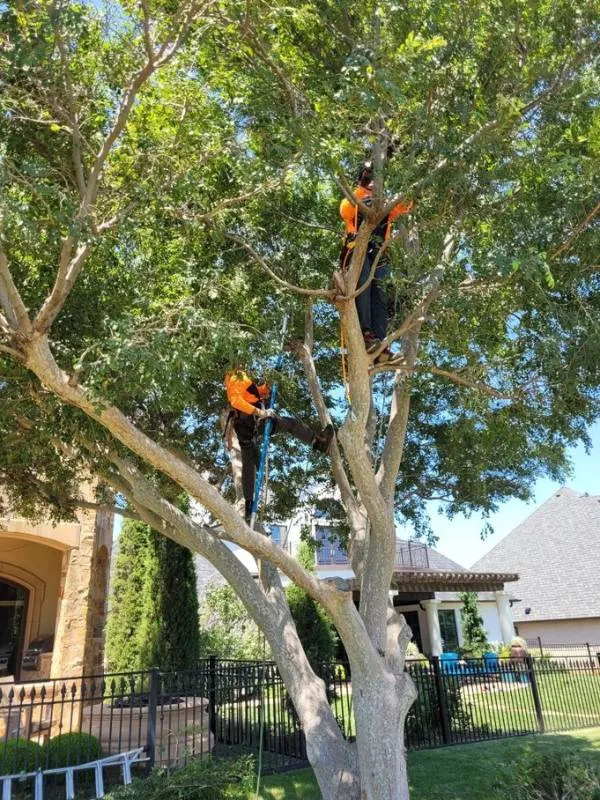
We walk your property and evaluate every tree you’re concerned about structure, species, health indicators, root zone, and proximity to structures. You get a written findings summary.
We identify any disease, pest activity, structural defects, or hazard conditions present. You get an honest recommendation not a sales pitch for the most expensive option.
For permit applications, insurance claims, property disputes, or legal matters, we provide a formal written arborist report documenting tree condition, risk level, and recommended action.
If treatment is recommended, we handle it. If removal is the right call, our crew handles that too. If your tree simply needs monitoring, we tell you that and schedule a follow-up.
Charleston’s tree canopy is unique from Live Oaks and Loblolly Pines to Sabal Palms, Water Oaks, and Pecans. Each species requires a different removal approach, and every property adds its own challenges. Here’s what our Charleston arborists handle every day:
A formal TRAQ-standard evaluation of a tree’s structural integrity, failure potential, and consequences of failure. Used by homeowners before hurricane season, by property managers for liability documentation, and by attorneys and insurers for legal and insurance purposes. Our arborist produces a written risk assessment report following ISA TRAQ methodology.
Visual and diagnostic evaluation of tree health identifying fungal infections, bacterial diseases, pest infestations, nutrient deficiencies, and root zone issues. Charleston’s warm, humid climate creates specific disease and pest pressure that requires local knowledge to diagnose correctly.
Common tree health problems we identify on Charleston properties:
Live Oaks are Charleston’s most significant trees culturally, ecologically, and legally. An arborist consultation before any work on a Live Oak is essential. We assess health, structural integrity, permit requirements, and preservation options. If a tree is protected under Charleston’s ordinance, we provide the ISA documentation the city requires for permit applications.
The most valuable arborist service a Charleston homeowner can schedule before June 1. We assess every tree on your property for structural defects, dead wood, and failure risk then prioritize what needs attention before storm season. A written inspection report documents the condition of your trees and can support insurance claims if storm damage occurs afterward.
When a tree has co-dominant stems, a significant lean, or a history of branch failure but removal isn’t warranted, cabling and bracing can extend the tree’s safe life significantly. Our arborist evaluates whether cabling is appropriate, installs high-strength steel cable systems to ISA standards, and schedules follow-up inspections to monitor the installation.
Formal written reports for permit applications, property sales, legal disputes, insurance claims, and HOA compliance. We document tree species, DBH, condition, risk level, and monetary value using ISA valuation methodology. Required for Grand Tree removal permit applications with the City of Charleston.
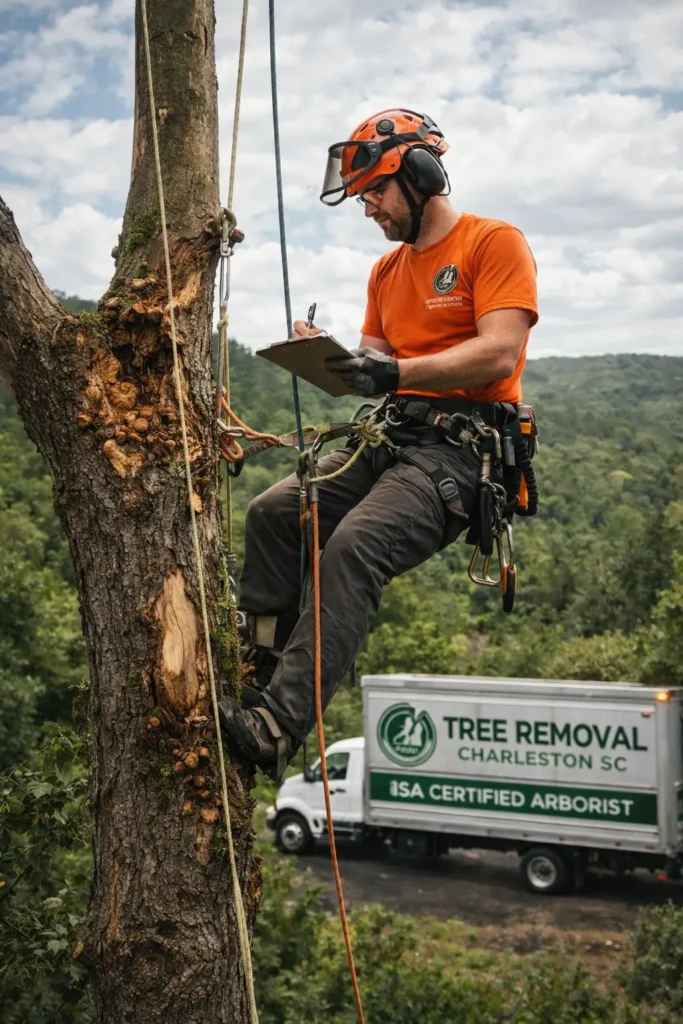
When it comes to Arborist Services , safety, skill, and reliability matter most and that’s exactly what we deliver.
ISA Certified + TRAQ Qualified – Two credentials, not one. ISA Certification covers tree care knowledge. TRAQ qualification covers formal tree risk assessment methodology. Both matter for serious tree evaluations.
Objective Assessments –We don’t recommend removal to sell a removal job. We recommend what’s right for the tree and your property. Homeowners who’ve received honest “your tree is fine” assessments from us become our most loyal long-term clients.
Charleston-Specific Knowledge – Live Oak ordinances, Lowcountry disease pressure, coastal storm risk, hydric soils. Local expertise that national companies and recently-arrived franchises can’t replicate.
Full Written Reports Available – ISA-standard documentation for permits, insurance, and legal purposes. Not every arborist provides written reports. We do.
Most homeowners aren’t sure when to call an arborist versus when to just call a tree company. Here’s a straightforward guide:
Our arborist is involved in every significant job regardless. For straightforward removals and trims, the crew handles it. For anything involving tree health, risk, permits, or disputes start with the arborist.
If you’re on the fence about whether your tree needs to come down, call the arborist first. A removal you didn’t need costs you money and a tree you can’t get back. An arborist assessment costs a fraction of that and gives you a clear answer either way.
Basic on-site assessments start at $150–$300 for a single tree evaluation. Full property assessments covering multiple trees run $300–$600 depending on property size and number of trees. Formal written arborist reports for permits or legal purposes are quoted separately based on scope. Call (843) 517-8288 for specifics.
An ISA Certified Arborist has passed a comprehensive examination covering tree biology, diagnosis, pruning, risk assessment, and safety and maintains certification through ongoing education. Most tree companies employ experienced climbers and groundsmen who are skilled at the physical work but aren’t trained in formal diagnosis or risk methodology. For health assessments, permit documentation, and risk evaluations, certification matters.
For trees requiring a permit Live Oaks 24 inches DBH or larger in the City of Charleston, or any regulated tree in Summerville a written arborist assessment documenting the tree’s condition is typically required as part of the permit application. For Grand Trees, a formal ISA report is required. We provide this documentation as part of the permit process.
Often yes if the disease is caught early enough. Oak wilt in early stages can be treated with fungicide injections and root barrier installation. Scale insect infestations respond well to systemic insecticide treatments. Hypoxylon canker on a tree that’s otherwise healthy can be managed by addressing the underlying stress. The key is early diagnosis which is why an annual or pre-hurricane arborist inspection pays for itself.